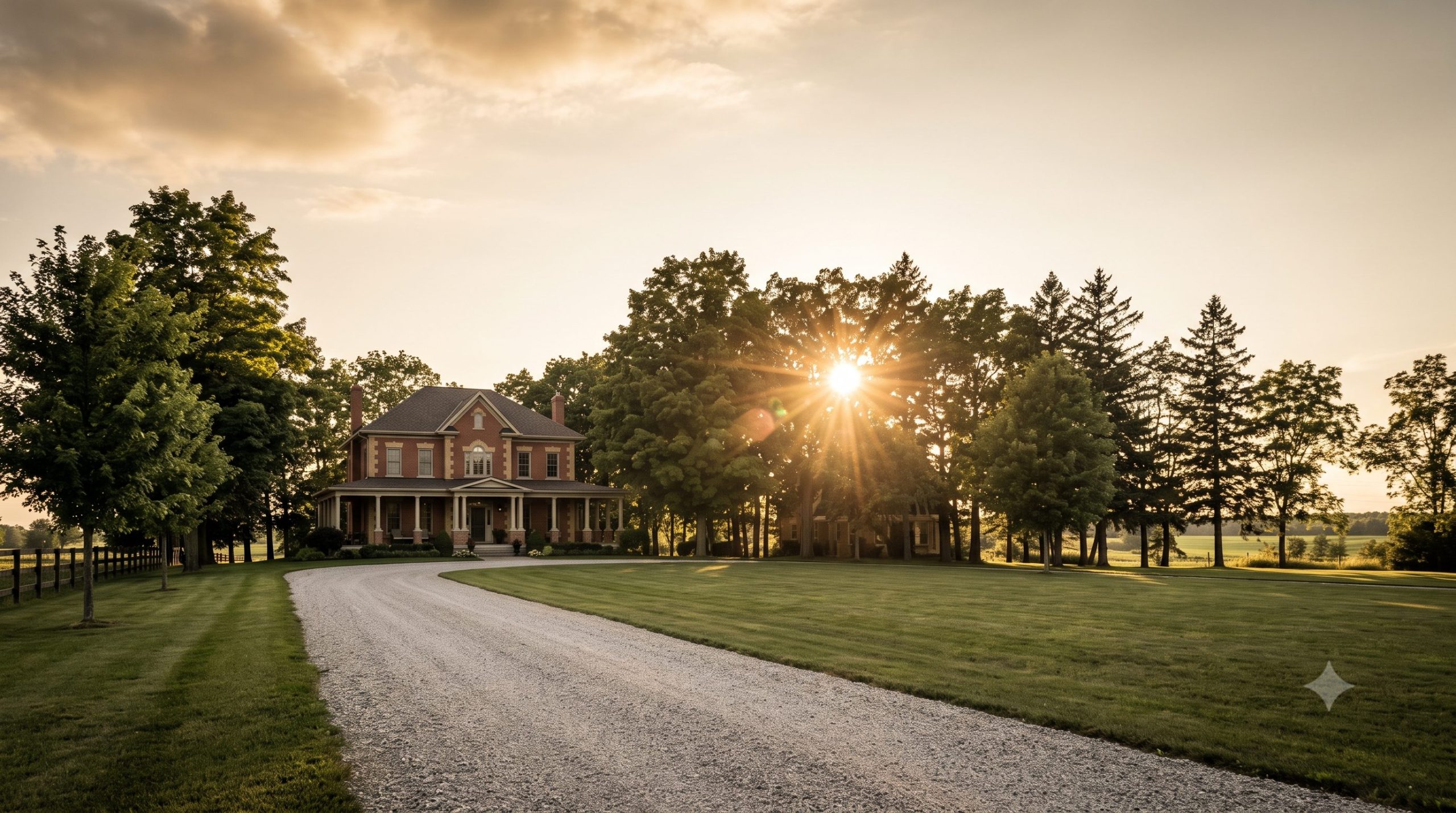
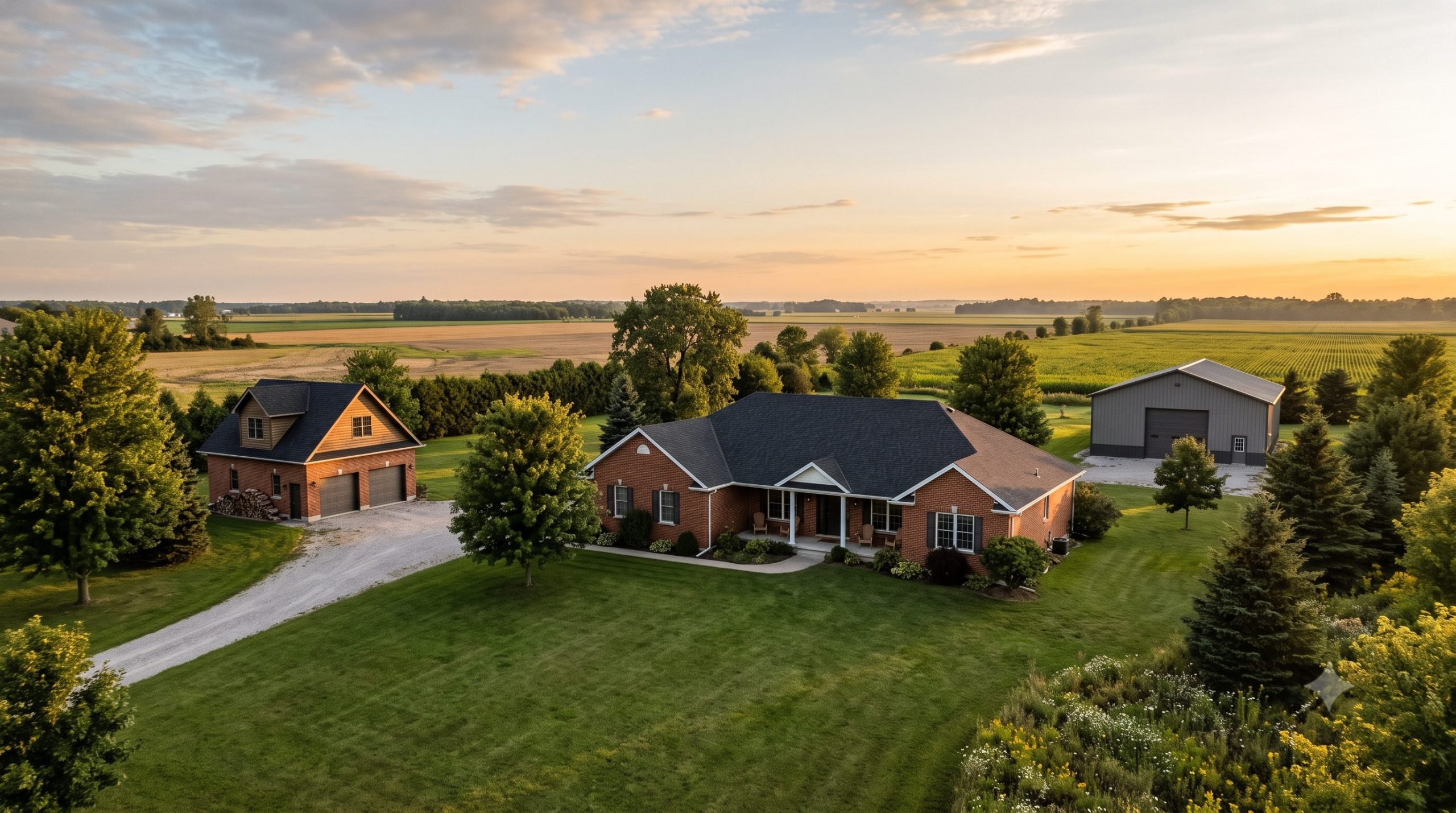
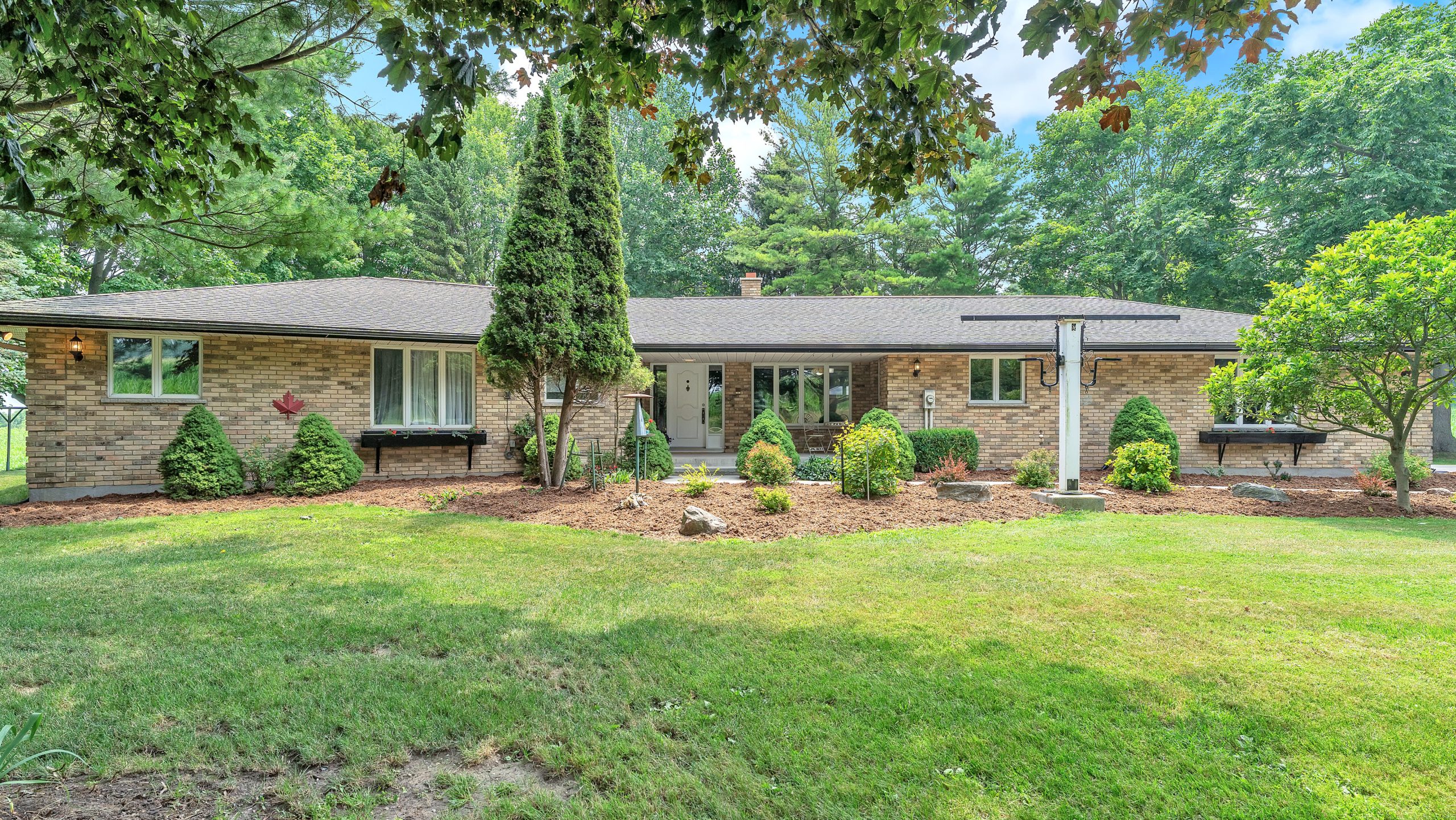
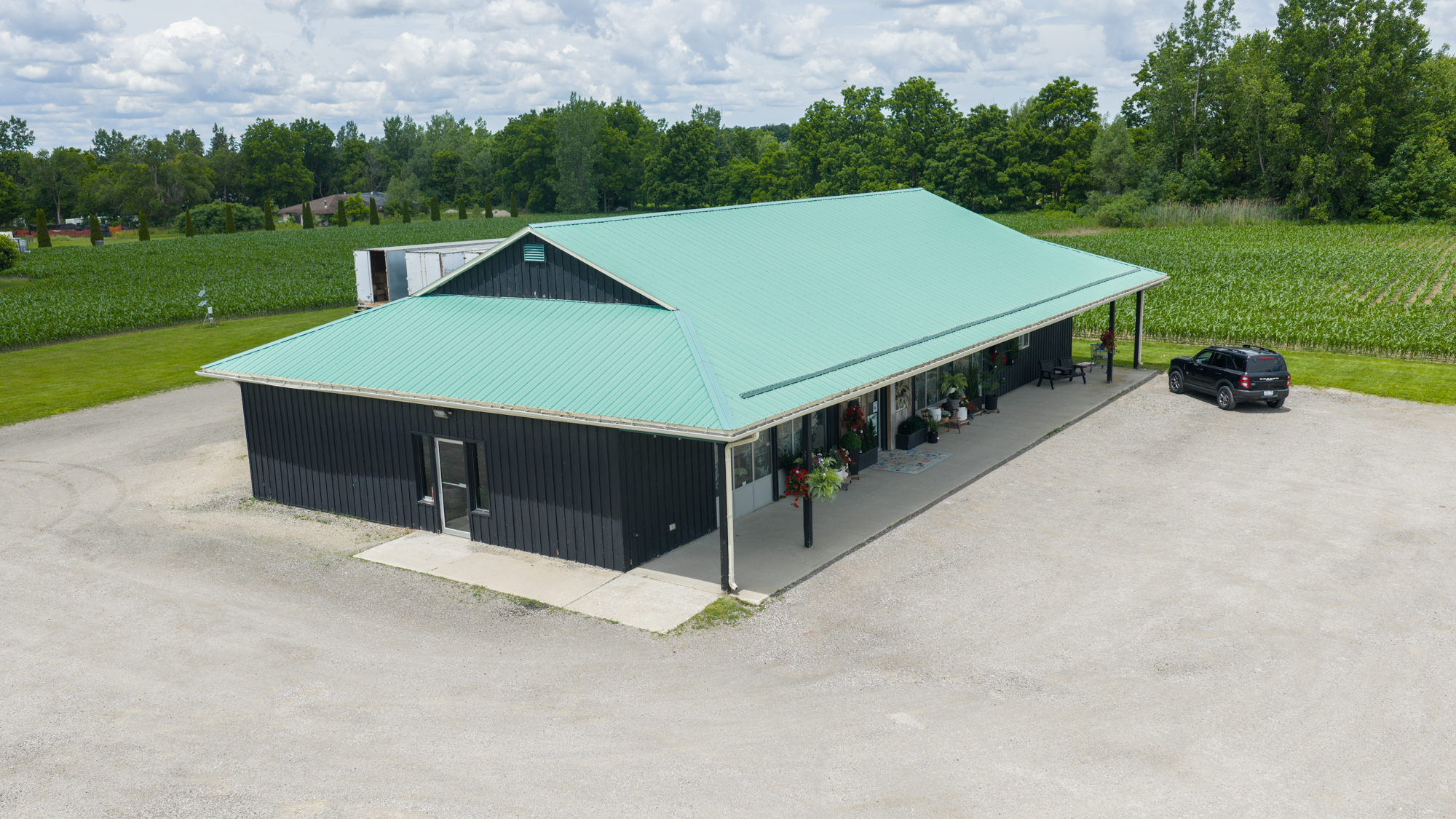
The best rural homes often sell before they ever reach realtor.ca.
Rural Buying · Strategy · London & St. Thomas
Why the Best Rural Homes Sell Before They Hit realtor.ca
By Ken Small, Ken Small Real Estate Team · Century 21 First Canadian Corp., Brokerage · serving London & surrounding areas (Dorchester, Komoka, Delaware, Strathroy, St. Thomas), Middlesex County & Elgin County
Last updated: July 26, 2026
The Bottom Line (Quick Answer)
The best rural shop-and-acreage properties near London and St. Thomas often sell before they reach realtor.ca — agent to agent, neighbour to neighbour, estate to buyer.
A high public inventory doesn’t help you; it’s mostly the homes that didn’t sell. The one that actually fits is scarce and moves quietly.
Winning buyers get on a proactive off-market list with the Ken Small Real Estate Team and hear about the real ones first. Being early beats bidding higher.
If you’re hunting rural acreage with a shop near London or St. Thomas and you check realtor.ca every night, here’s an uncomfortable truth: the best ones often sell before they ever show up there. Not because every corner of the market is hot — you can track the current London & St. Thomas numbers straight from LSTAR’s monthly statistics — but because the good rural properties are scarce and move quietly.
Why is a “buyer’s market” not helping me?
A buyer’s market on paper doesn’t mean the right property is available to you. High inventory is mostly the homes that didn’t sell — the tired, the overpriced, the already-passed-on. The property that actually fits — real shop, real power, workable acres — is the exception, and it rarely waits for a portal. If shop space and land are your priority, understanding what rural RS zoning actually lets you do is half the battle.
Why do cautious rural sellers go quiet?
Many rural sellers don’t want a sign on the road, a parade of unqualified buyers through their shop, or the whole concession knowing their business. So they sell the way it’s always been done out here — agent to agent, neighbour to neighbour, estate to buyer — in one quiet conversation. If you’re not in that conversation, you never had a shot.
How do winning buyers get the head start?
They stop hunting the public market and get on a proactive off-market list. When something real comes up — a pre-market listing, an estate, a private seller — they hear about it first, and a live MLS alert gives them a head start on anything that does go public. Being early beats bidding higher, especially in a private deal where a ready buyer wins. And when a property does surface, they already know how to vet it — the wells, septic & WETT checklist keeps them from waiving conditions on a money pit.
Refreshing realtor.ca
On a proactive off-market list
You see what didn’t sell.
You hear about what’s coming.
You compete with everyone.
You’re often first, sometimes alone.
You bid higher to win.
You’re early — being ready wins.
Pro Tip:
Tell your agent the exact box you’re hunting — “heated shop, own power, 1–5 acres, within 30 minutes of St. Thomas.” Specific criteria are what let an agent make the quiet call on your behalf when a property surfaces. Vague buyers get portal leftovers.
Honest answer: if you’re a casual browser who wants to scroll photos on weekends with no real intention to buy in the next year, the off-market list isn’t for you — it’s for ready buyers. And if you refuse to define your criteria or get pre-approved, no agent can act fast enough on your behalf when the quiet deal appears. The list rewards buyers who are actually ready to move.
Frequently asked questions
What does “off-market” mean? A property sold without a public MLS/realtor.ca listing — through pre-market, private, or estate channels.
Is off-market legal and fair? Yes, when handled transparently by a licensed brokerage under RECO/TRESA rules.
How do I get on the list? Tell us your exact criteria and get pre-approved — then we call you when a match surfaces.
Want to see the good ones first?
Get on the off-market buyer list. When a real rural shop-and-acreage property comes up — public or not — you’ll hear about it before the portal does.
About the author. Ken Small leads the Ken Small Real Estate Team with Century 21 First Canadian Corp., Brokerage, serving London & surrounding areas (Dorchester, Komoka, Delaware, Strathroy, St. Thomas), Middlesex County & Elgin County. The team’s approach is radical transparency — answer every question honestly, hand buyers the full file, and let the truth do the selling. Reach Ken directly at (226) 271-1140.
Ken Small Real Estate Team · Century 21 First Canadian Corp., Brokerage · (226) 271-1140. Market figures via LSTAR and deemed reliable but not guaranteed. Off-market sales handled transparently under RECO/TRESA. Not intended to solicit buyers or sellers currently under contract.
Wells, septic, and WETT — the rural questions to ask before you buy.
Rural Buying · Due Diligence · Elgin County
Wells, Septic & WETT: The Rural-Home Questions Nobody Answers
By Ken Small, Ken Small Real Estate Team · Century 21 First Canadian Corp., Brokerage · serving London & surrounding areas (Dorchester, Komoka, Delaware, Strathroy, St. Thomas), Middlesex County & Elgin County
Last updated: July 26, 2026
The Bottom Line (Quick Answer)
Before buying rural acreage near London or in Elgin County, make three checks a condition of your offer: the well (flow-rate + water quality), the septic (age, last pump-out, bed location), and a WETT inspection on any wood-burning appliance.
Skip them and a “dream property” becomes a five-figure money pit — a failed septic bed or a weak well are the classic rural surprises.
The Ken Small Real Estate Team hands rural buyers this exact checklist so they buy the land and the workshop with their eyes open.
City homes hide their problems behind drywall. Rural properties hide theirs underground and in the outbuildings. Here’s the honest checklist — the questions most buyers forget until it’s too late — so you buy acreage, not a money pit.
1. The well — what do I ask for?
Ask for the well record, a recent flow-rate test, and a potability (water quality) test. Ontario keeps well records on file — you can look up a property’s record on the province’s Well Records map, and the “Wells on your property” guide explains your obligations as an owner. A weak or contaminated well is expensive and disruptive to fix. No test, no offer — make it a condition.
2. The septic — where’s the trap?
Find out the age, the last pump-out date, and where the bed actually is. A failed septic bed is a five-figure replacement. Septic (on-site sewage) permits and records are handled locally — confirm through the Municipality of Dutton Dunwich building department. And if you’re planning a second unit, septic capacity is the gatekeeper — see what RS zoning actually lets you build before you count on it. A quick inspection during your conditional period is cheap insurance.
3. Heat & hydro — what’s different rurally?
Rural often means no natural gas. Check the furnace/heat-source age and efficiency (a newer heat pump, like the 2025 unit at 29159 Lakeview, is a big plus), the panel amperage, and whether the shop has its own service. Dual 200-amp is serious power for a workshop.
4. The WETT inspection — why does my insurer care?
If there’s a wood-burning fireplace or stove, most insurers will want a WETT inspection (Wood Energy Technology Transfer) — here’s what a WETT inspection is, and you can find a certified professional through WETT Inc. It confirms the appliance is installed and functioning safely. Get it early — a clean certificate is a trust asset; a surprise finding during conditions can stall a deal. If a fireplace is sold “as-is,” factor that in.
5. Access & the shops — is it legal?
Confirm road maintenance and year-round access, and check that outbuildings are permitted and legally used — that a structure exists is not proof it’s legal.
The rural due-diligence checklist
Check
Ask for
Why it matters
Well
Well record, flow-rate, potability test
Water you can’t drink or run is a deal-breaker.
Septic
Age, last pump-out, bed location, inspection
A failed bed is a five-figure fix.
Heat / hydro
Heat-source age, panel amps, shop service
No gas rurally; power runs the shop.
WETT
Certificate on any wood appliance
Your insurer will require it.
Access / shops
Road maintenance, permits on outbuildings
“It exists” is not “it’s legal.”
Authorities: Ontario Ministry of the Environment (well records), WETT Inc. (wood-appliance certification), Municipality of Dutton Dunwich (septic/building). Retrieved 2026-07-26.
Pro Tip:
Write the well, septic and WETT checks into your offer as conditions — not a friendly “we’ll look later.” Conditions give you a clean exit if something fails. A seller who has already done them (and hands you the paperwork) is telling you something good.
Straight talk: if you’re tempted to skip the well test to win a bidding war, don’t — water is the one thing you can’t negotiate after closing. If the septic age is unknown and the bed location is a mystery, that is not the property to waive conditions on. And if there’s a wood stove with no WETT certificate and you haven’t confirmed your insurer will bind, slow down. Rural rewards the prepared, not the fast.
Frequently asked questions
What is a WETT inspection? A safety check of wood-burning appliances that most insurers require in rural homes.
How much is a septic replacement? Typically five figures — which is why age and condition matter before you buy.
Should I test the well? Always — flow-rate and potability, as a condition of your offer.
Buying rural? Do the due diligence before you write.
Tell me the property you’re considering and we’ll line up the well, septic and WETT checks the right way — before the offer, not after.
Want to see a fully-documented example? Open the 29159 Lakeview document binder — inspection summary, warranty, floor plans and more.
About the author. Ken Small leads the Ken Small Real Estate Team with Century 21 First Canadian Corp., Brokerage, serving London & surrounding areas (Dorchester, Komoka, Delaware, Strathroy, St. Thomas), Middlesex County & Elgin County. The team’s approach is radical transparency — answer every question honestly, hand buyers the full file, and let the truth do the selling. Reach Ken directly at (226) 271-1140.
Ken Small Real Estate Team · Century 21 First Canadian Corp., Brokerage · (226) 271-1140. Educational only; consult qualified inspectors. Well, septic, and WETT conditions vary by property — verify with licensed professionals and the Municipality of Dutton Dunwich before relying on them. Information deemed reliable but not guaranteed. Not intended to solicit buyers or sellers currently under contract.
RS zoning in Dutton/Dunwich — what you can actually build.
Rural Buying · Dutton/Dunwich · Elgin County
RS Zoning in Dutton/Dunwich, Explained: What You Can Actually Build
By Ken Small, Ken Small Real Estate Team · Century 21 First Canadian Corp., Brokerage · serving London & surrounding areas (Dorchester, Komoka, Delaware, Strathroy, St. Thomas), Middlesex County & Elgin County
Last updated: July 26, 2026
The Bottom Line (Quick Answer)
In the Municipality of Dutton Dunwich (Elgin County, near London, Ontario), RS — Special Rural Residential zoning generally permits your single home plus an additional residential unit (in-law suite or rental) and home occupations (a business run from the property).
Ontario now lets most residential lots add up to three units as-of-right — but the local zoning by-law, lot size, and septic capacity set the real limit. Zoning permits a use; it never guarantees approval.
Verify the exact property with the municipality before you write an offer. The Ken Small Real Estate Team helps buyers across Elgin County read the zoning before the price.
Most buyers look at a rural property and see a house and some land. The sharp ones read the zoning first — because zoning decides whether you can add an income unit, move a parent in, or run a business from home. In parts of Dutton/Dunwich, that zoning is RS (Special Rural Residential), and paired with real land and power it is more useful than most people realize.
What is RS (Special Rural Residential) zoning?
RS is a residential zone applied to larger rural lots in Dutton Dunwich. The precise permitted uses, setbacks, and lot requirements are written in the municipality’s Zoning By-Law (the actual PDF). Before you rely on anything, confirm the property’s zone and any site-specific exceptions with the Dutton Dunwich Planning & Development department. For the plain-English basics of how any zoning by-law works, Ontario’s Citizen’s Guide to zoning by-laws is the authority.
What can you actually build on RS land?
Under Ontario’s housing rules, most homes can add residential units as-of-right, and home-based businesses are broadly permitted. Here is the realistic picture — and the source for each:
What you may add
The reality
Authority
A second unit (in-law suite / apartment)
Generally permitted; must meet Building Code, parking & septic capacity.
Sources retrieved 2026-07-26. Provincial rules set the floor; the municipal by-law and your property’s septic capacity set the ceiling.
Pro Tip:
The unit is the easy part — the septic is the gatekeeper. A second dwelling can overload an older septic bed, and that is a five-figure surprise. Confirm capacity before you count on the income. We cover exactly how in the rural wells, septic & WETT checklist.
The three ways buyers actually use RS zoning
The in-law suite — multi-generational living without two mortgages.
The rental unit — an additional residential unit that helps carry the property.
The home business — a workshop, a contractor’s base, a hobby-turned-income, when the shop space and power are already there.
The honest caveats (the hidden traps)
Zoning permits a use — it doesn’t guarantee approval. Three traps that sink rural plans: (1) septic capacity that can’t support a second unit; (2) site-specific exceptions on the parcel that override the general RS rules; (3) permit and Building-Code costs people forget to budget. Confirm all three with the municipality and line them up during your conditional period. Never assume; verify.
Straight talk: if your entire plan depends on income from a second unit and the property has an older or undersized septic, do not waive conditions until an inspector confirms capacity. If you need the business use approved before closing, get written confirmation from the municipality first. And if the parcel carries a site-specific exception, the general RS rules may not apply to you. When the plan can’t survive a “verify first” step, that’s your signal to slow down.
Frequently asked questions
Does RS zoning let me build a second house? It generally permits an additional residential unit; the by-law, lot size, and septic decide feasibility. Confirm with the municipality.
Can I run a business on RS-zoned land? Home occupations are typically permitted; scale, signage, and traffic are limited by the by-law.
Do I need permits? Yes — a second unit needs building permits and adequate septic capacity. Budget for both.
Thinking about a property with room to build or earn?
Let’s read the zoning on the properties you’re considering — before you write an offer, not after.
About the author. Ken Small leads the Ken Small Real Estate Team with Century 21 First Canadian Corp., Brokerage, serving London & surrounding areas (Dorchester, Komoka, Delaware, Strathroy, St. Thomas), Middlesex County & Elgin County. The team’s approach is radical transparency — answer every question honestly, hand buyers the full file, and let the truth do the selling. Reach Ken directly at (226) 271-1140.
Ken Small Real Estate Team · Century 21 First Canadian Corp., Brokerage · (226) 271-1140. Zoning permissions vary by property and are subject to municipal confirmation; verify permitted uses, septic capacity, and permits with the Municipality of Dutton Dunwich before relying on them. Information deemed reliable but not guaranteed. Not intended to solicit buyers or sellers currently under contract.
A local guide to John E. Pearce Provincial Park near Wallacetown – the Spicer Trail, a 33-metre Lake Erie bluff, century-old Carolinian forest, and birding.
3014 Westminster Drive, London: What It Is, What It’s Zoned, and What You Can Do With It
The Bottom Line (Quick Answer)
What it is: 3014 Westminster Drive — a 3.66-acre commercial corner lot at Wellington Road and Westminster Drive, London, asking $849,900, vacant September 1, 2026.
Why it’s rare: most agricultural land on this corridor can’t be used commercially. This corner carries a grandfathered wholesale/distribution right — plus farm-market, nursery, and home-with-home-business options — on one of south London’s highest-traffic corners, roughly 16,000 vehicles a day on Wellington.
The move: call Ken Small to talk through what fits your business — often only a minor variance is needed — and he’ll send the full Property Details Package.
Here’s What We’ll Cover
What are the specs of 3014 Westminster Drive?
What is it used for right now?
Why is the zoning unusual — and is the commercial right real?
So what can you actually do with it?
What income can it generate?
What’s the honest file — every flaw worth knowing?
Who is this property for, and who is it not for?
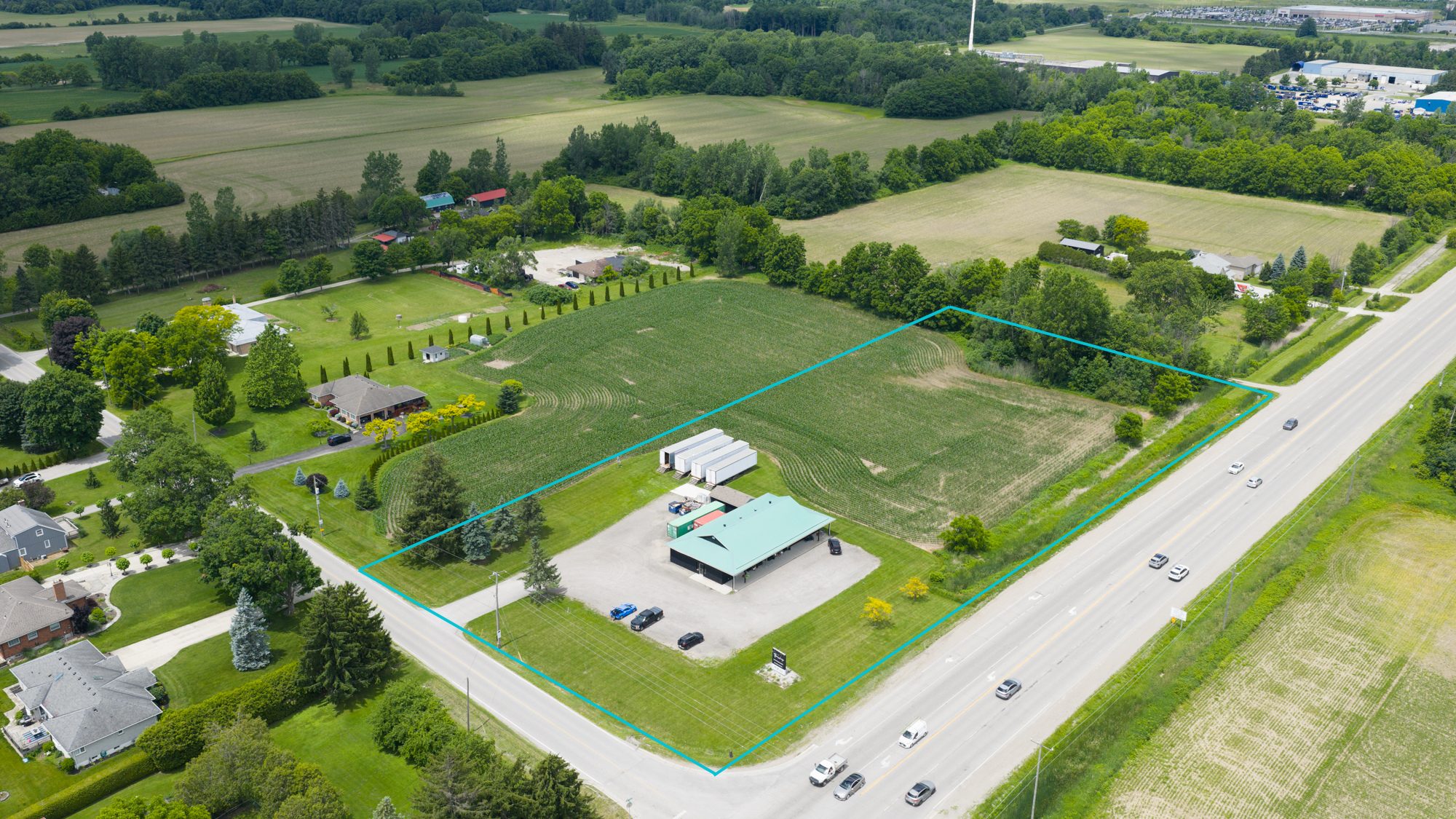
Aerial of the full 3.66-acre corner — Wellington Rd & Westminster Dr, with property lines.
You found 3014 Westminster Drive, and you probably have the same three questions everyone does: what is it, what’s it zoned, and what could you actually do with it. Most listings hand you a price and a photo. This one’s going to hand you the whole file — the specs, the zoning in the City’s own words, the income picture as it really stands, and every flaw worth knowing — and then help you figure out whether it’s the right property for you. Because the honest headline is that very few properties in this city give you this many options on one parcel.
Let’s walk through it.
What are the specs of 3014 Westminster Drive?
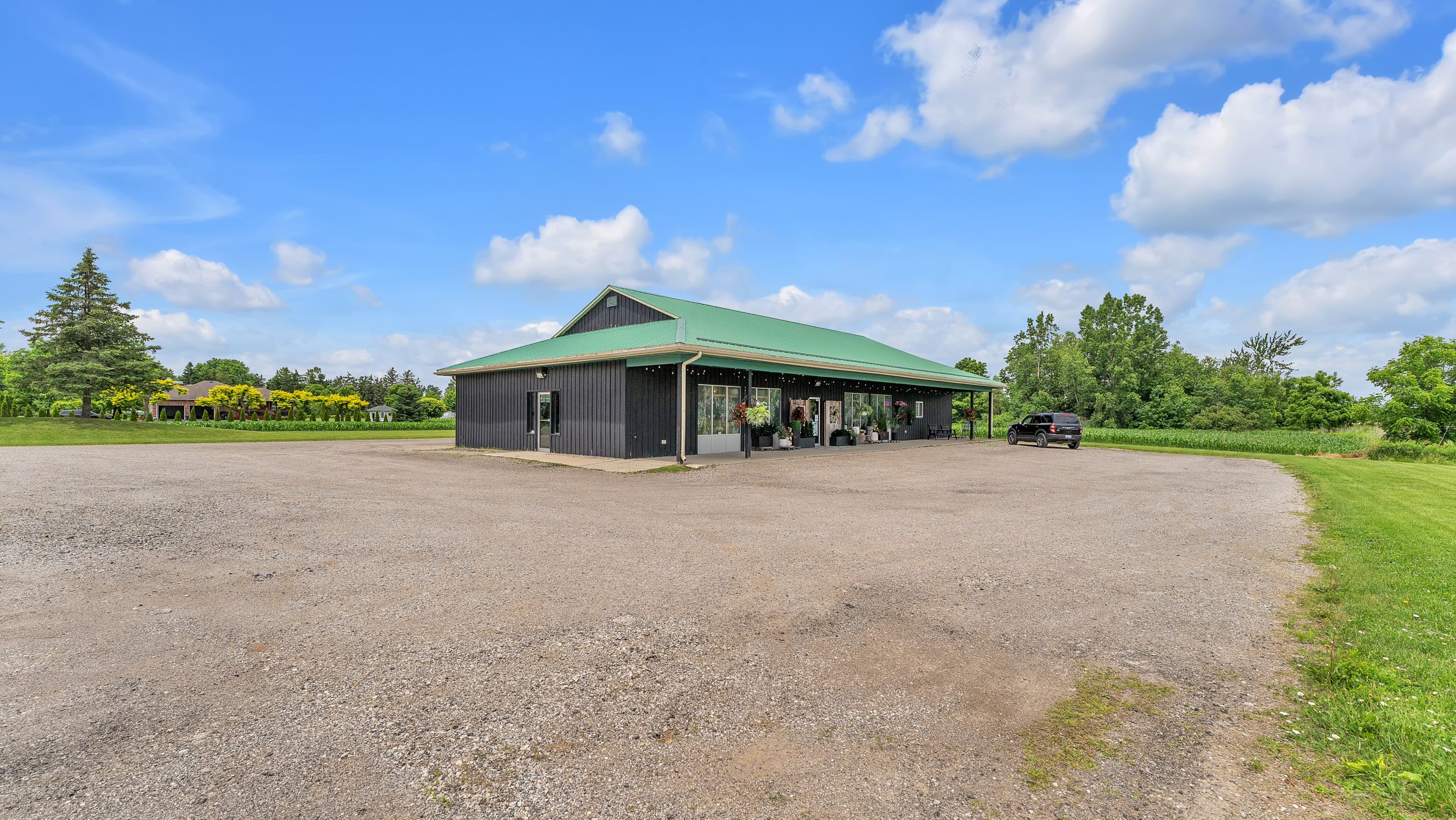
It’s a 3.66-acre commercial corner lot at Wellington Road and Westminster Drive — one of south London’s highest-exposure positions, with roughly 16,000 vehicles a day passing on Wellington. Asking price is $849,900. The building is about 3,543 square feet — roughly 2,311 of showroom plus another 1,232 of utility, storage, offices and a loading dock — built in 1996, and fronted by an 882 sq ft poured-concrete covered veranda that runs the full length of the building. The roof is steel. The furnace and air conditioning were replaced in 2017, and the building has 200 amp service with a 70 amp subpanel.
The property is served by a 160 ft drilled well and a septic system. Property taxes were $15,616 in 2025.
The lot gives you room: a large corner yard with plenty of parking and space for equipment, storage, or fleet. There are four older transport trailers on the property — the seller will leave them or haul them off, whichever you prefer. Part of the back acreage is currently worked by a neighbouring farmer, an informal arrangement that keeps the land productive.
Aerial showing the 882 sq ft covered veranda running the full length of the building.
Feature
3014 Westminster Drive
Price
$849,900
Location
Commercial corner lot — Wellington Rd & Westminster Dr
Lot Size
3.661 acres
Building
~3,543 sq ft (2,311 showroom + 1,232 utility/storage/offices/loading)
Veranda
882 sq ft poured-concrete, covered, full length (10.5 x 84 ft)
Year Built
1996
Roof
Steel
Heating / Cooling
Furnace & A/C replaced 2017
Electrical
200 amp service with 70 amp subpanel
Water
160 ft drilled well + septic
Daily Traffic
~16,000 vehicles on Wellington Rd
Taxes (2025)
$15,616
Possession
Vacant September 1, 2026
What is 3014 Westminster Drive used for right now?
The building is currently home to Fauxliage — formerly Greens Galore — an artificial-plant wholesale and retail business that’s operated here for years. They’re relocating, which means vacant possession is available September 1st. That matters: this isn’t a property where you have to imagine a commercial use. It’s been running as one.
Inside the 2,311 sq ft showroom — turnkey commercial space.
Why is the zoning unusual — and is the commercial right real?
The land carries the City of London’s agricultural (AG1) designation. On its own, that designation permits a specific list of uses: agricultural uses, a farm dwelling, forestry, kennels, conservation lands, a nursery, a farm market, and similar. You’ll notice “run a business” isn’t on the standard menu — and for most land in this corridor, it isn’t there.
This parcel has something extra. It carries a grandfathered commercial right, carried forward from the former Township of Westminster when the area was annexed into London, permitting a wholesale and distribution establishment within the existing structures — in addition to those base agricultural and residential uses. It’s a vested legal use that predates and survives the current zoning. A loophole is something a city can close; a grandfathered legal right is the opposite — a use the municipality already recognizes. You’re not betting on getting approval; you’re buying a use that’s already on the books, on a property that’s been actively used commercially right up to today.
So what can you actually do with it?
Put the zoning layers together and the list of what’s permitted here is genuinely long for one property:
The corner yard and parking — room for equipment, storage, or fleet.
A farm market or nursery — both permitted uses, on a 3.66-acre corner site with 16,000 cars a day going past on Wellington.
A wholesale or distribution operation — fits the grandfathered right; the building and yard are set up for it, vacant September 1st.
A home and a home-based business on the same land — the base zoning supports a single-family dwelling with a home occupation.
Agricultural use — the land is productive and already partly farmed.
A yard-and-storage operation — for a trade that needs room, the space is here.
Have a different idea? Many uses need only a minor variance, not a full rezoning. The possibilities are limited mostly by your imagination — call Ken and we’ll talk through what fits your specific business.
Pro Tip:
Zoning answers are use-specific and property-specific. Before you rule this property in or out, call Ken first — we’ll walk the possibilities together and map the path for your specific business.
What income can 3014 Westminster Drive generate?
This is where a vacant building works in your favour. The most recent tenant paid $2,542.50 a month including HST, with property taxes paid separately on top — and that was the old rate. With vacant possession September 1st, you’re not inheriting someone else’s lease; you set the terms. What a new lease commands depends on the use, the term, and how much of the building and yard a tenant takes, so the upside is genuinely open. Three ways to play it: occupy it yourself, lease it out at today’s rates, or do both.
What’s the honest file — every flaw worth knowing?
Radical transparency is the whole point, so here’s the rest of the file:
Floodplain. The property used to sit inside the Upper Thames River Conservation Authority’s regulated area, tied to flood hazards from the Foreman Drain. Following the Dingman Creek Environmental Assessment, UTRCA’s updated mapping — approved by its Board on June 23, 2026 — shows this parcel outside the regulated area, with the public map updating by July 23, 2026. UTRCA has confirmed it has no concerns. Confirm current status with UTRCA; the direction is from regulated to clear.
Gas / venting. A water-heater venting issue (cracked ABS venting, code 4.5.2) was identified and corrected by a licensed technician on December 20, 2024, documented and sent to Enbridge. The related permit status is being confirmed with the City.
Septic. The property is on a septic system.
Zoning continuity. As with any grandfathered right, continued legal standing is confirmed with the City as a normal closing step — and the property’s active commercial use right up to now speaks directly to it.
Who Should NOT Buy This Property Right Now?
This property fits a specific kind of buyer: the wholesale or distribution operator who wants to own instead of lease, the owner who wants to build a home and run a business on the same corner acreage, the investor who sees a rare commercial-use parcel, or the trade that needs real yard and storage.
It is not for someone who wants a turnkey retail plaza, a finished office, or zero homework. This is a property with options, and options reward the buyer willing to confirm their specific use and move with some conviction. If that’s you, the upside here is unusual.
The best path forward
3014 Westminster Drive is offered under a Certified Pre-Owned Commercial standard: inspected, documented, and disclosed in full, so you’re working from facts instead of chasing surprises. If you want to be operating here when the building comes vacant September 1st, the time to start the conversation is now — confirming your use and lining up financing takes lead time.
About the Author — Ken Small, Ken Small Real Estate Team
Ken Small is a real estate professional with Century 21 First Canadian Corp., Brokerage, serving London, St. Thomas, and Elgin County, Ontario. He specializes in commercial and residential property across the London arterial corridors, radical-transparency listing practices, and zoning-and-use due diligence for owner-operators and investors. With more than 20 years in the business, he brings deep local market experience to every transaction. [OPTIONAL: add any designations (e.g., ABR, SRS) to further strengthen the credential stack.]
The Heat Wave Hot Sauce Expo is London’s largest spicy food event, taking place on Saturday, February 28, 2026, from 11:00 AM to 7:00 PM at Centennial Hall (550 Wellington St). General admission tickets are $9.99 in advance or $15 at the door. The event features over 50 hot sauce vendors, local craft breweries, and live eating competitions including the famous “Ring of Fire”.
When and where is the 2026 Heat Wave Expo?
The event runs for one day only: Saturday, February 28, 2026. Doors open at 11:00 AM and the heat lasts until 7:00 PM.
It is located in the heart of downtown London at Centennial Hall (550 Wellington St) [Google Map Link].
Parking Pro Tip:
The lot next to Centennial fills up instantly. Save money (and your sanity) by parking a few blocks east near Victoria Park and walking over. The cold air on the walk back will feel amazing after the wings.
How much are tickets and food?
You should buy your tickets online before you go to save cash for the vendors.
Important Note on the “Wing Deal”: If you were looking for the “Admission + Wings” combo ticket, it sold out on February 1st. You missed it. But don’t worry, you can still buy food inside (see below).
Can you buy actual meals at the Expo?
Yes. You aren’t just eating sauce on a spoon. You can buy full meals inside to soak up the heat.
The Anchor:C’Angelina Meat Catering (Booth #124b) is anchoring the food side of the expo. These are the local meat specialists you want to visit first to build a “base” before attacking the hot stuff.
The Strategy: Grab your food first, then take your tray to the vendor tables to sauce them up with the samples. It’s the ultimate “try before you buy.”
Local Heroes: The London & Area Roster
This is a national event, but we support the home team. Use this checklist to visit the local legends:
The London City Standouts:
Oceanspice Company (Booth #109): Authentic Jamaican Scotch Bonnet sauces and jerk marinades.
Proper Heathen (Booth #151): High-flavor, artisanal small batches with a modern edge.
The Botanist Alchemy (Booth #107): Farm-to-bottle, all-natural, and organic sauces.
Burn Out Hot Sauce (Booth #116): Intense flavor-first profiles created by local enthusiasts.
Gratzy’s BBQ (Booth #120): Family-recipe BBQ and dipping sauces.
The Regional Powerhouses:
Tijuana Tom’s (St. Thomas – Booth #128): Massive variety ranging from mild to “melt your face.”
Chucky Habanero (Mt. Brydges – Booth #135): Famous for fruit-and-fire pairings like Roasted Pineapple Habanero.
Special Mention: The Soda Pop Bros: While they aren’t London-based, they will be there pouring their legendary craft sodas—the perfect fire extinguisher if you aren’t drinking beer!
The Official 2026 Fight Card
The Ring of Fire is where the legends are made. Even if you don’t compete, you have to watch. You can view the Full Schedule of Events Here.
3:00 PM: The Heatwave Chicken Wing Eating Competition
4:00 PM: “Shoot The Boot” Ginger Beer Challenge (Soda Pop Bros)
4:15 PM: Spicy Challenge (TBD)
4:30 PM: The “Tag Team” Speed Eating Competition
5:15 PM: The Vegan, Fastest Basket Competition
5:45 PM: The Main Event: Hurt Berry Farms Chilli Pepper Eating Competition
Think you have what it takes? Registration is OPEN NOW online, or you can check the DJ Booth at 11:00 AM for any last-minute dropouts.
How do I survive the heat without ruining my day?
If you walk in and immediately try the “Level 10” Ghost Pepper sauce, your day is over.
The “Ladder” Method: Start with the mild salsas and fruity habaneros. Talk to the vendors—they are passionate artisans. Work your way up the Scoville scale slowly.
The Rookie Mistake: Do not drink water. Water spreads the oil (capsaicin) around your mouth.
The Great Northern Concrete Toboggan Race (GNCTR) is taking over Boler Mountain this week. The main event (Race Day) is Saturday, February 7, 2026. It features 400+ engineering students, 350-pound concrete sleds, and speeds hitting 60km/h. And yes, it is free to watch.
The Spectacle: What is it?
If you haven’t seen this before, it sounds like a typo. It isn’t.
This is Canada’s longest-running engineering competition, started back in 1974.
Engineering teams from across Canada (and the US) spend months designing toboggans with a critical constraint: The running surface (skis) must be made of concrete. They also have to hold 5 people, weigh under 350 lbs, and actually steer (mostly).
Why this is a big deal for London
This is only the second time in history London has hosted (the last time was 2014). Western University is the host school, bringing the event home after the University of Toronto took the title in Montreal last year with a Yellow Submarine sled.
The “Insider” Logistics (How to watch like a Pro)
If you want to support the students without the headache, here is the playbook:
When to go:Saturday, Feb 7 is Race Day. Aim for 10:00 AM – 2:00 PM.
Where to stand: Skip the top of the hill. Go to the bottom “run-out” zone. You get to see the braking systems deploy (or fail) and the teams celebrating. It’s the highest energy spot.
Parking Hack: The main lot at Boler will be a zoo. Drop passengers at the loop and park on the side streets South of the hill (check signs carefully!), or carpool.
Who Should NOT Go?
I want to be honest. This is a university engineering event. It is loud (“spirit” chanting is constant), crowded, and cold. If you prefer a quiet, heated environment, stay home and check the highlights on gnctr2026.ca.
Why this matters
We often talk about London as a “University Town.” This is what that looks like in action. Smart, talented people having fun and building community right here in our backyard.
You know that massive icicle hanging over your front porch? The one that looks like a winter decoration? It’s not just “weather.” It’s a warning sign that your attic is leaking heat—and it could be costing you thousands.
That icicle is the visible tip of an Ice Dam. And right now, your instinct is probably to go outside with a broom and knock it down.
Don’t do it. Hacking at the ice often rips the gutter right off the fascia or cracks your frozen shingles, turning a maintenance issue into a $5,000 repair bill. The real fix is stopping the heat loss in your attic, not fighting the ice.
🎥 Video Summary: Coming Soon
Why Is This Happening? (It’s Not Just the Snow)
Ice dams aren’t caused by cold weather; they are caused by heat leaking out of your house.
Warm air leaks into your attic because of gaps or thin insulation.
That warm air melts the snow on your roof—even when it’s -10°C outside.
The water runs down until it hits the eaves (the overhang). Since the eaves are cold, the water freezes instantly.
That ice builds up into a dam. Now, trapped water pools behind it and seeps under your shingles and into your drywall.
Put the Broom Away
When you see a 4-foot icicle, the temptation to knock it down is huge. Stop. In these temperatures, your shingles and aluminum gutters are brittle.
The Swing: One hard hit can shatter a frozen asphalt shingle.
The Weight: Icicles are heavy. If you knock a big one loose, the sudden weight shift can rip the spikes right out of your fascia board.
The Result: You might get the ice down, but you’ll be buying new eavestroughs in April.
Three Ways to Fix It (From $30 to $3,000)
If you have a dam right now, here are your three options, starting with the safest quick fix.
1. The Quick Fix: Melt a Channel
Cost: ~$30. Use Calcium Chloride. This is the stuff you want. It melts ice at much lower temperatures (-31°C) than salt and is safer for your roof. Look for products like Snow Joe MELT or Alaskan Ice Melter.
Do NOT use Rock Salt. Standard salt stops working at -9°C, corrodes your aluminum gutters, and ruins shingles.
How to do it: Get an old pair of pantyhose. Fill one leg with the Calcium Chloride crystals. Lay it vertically across the ice dam so it hangs over the gutter. It will slowly melt a channel through the ice, giving the trapped water a way to drain out.
Cost: $150 – $300 (plus install). You’ve seen these zigzag cables on roofs in Lambeth. They heat up and melt a path for the water to flow. This is a management tool, not a cure. It costs electricity to run, but it’s cheaper than replacing drywall.
Cost: $1,500 – $3,000+. The only way to stop this permanently is to keep your roof deck cold. That means sealing up the air leaks and topping up your insulation to R-60.
The 2026 Rebate Update (Good News):
As of January 2026, the Home Renovation Savings Program (HRS) has replaced the old HER+ program. You can get a rebate of up to $1,250 specifically for attic insulation upgrades.
The Change: Unlike previous years, the standalone attic rebate no longer requires an upfront energy assessment in many cases. This saves you time and fees.
Before you file a claim for a water spot on your ceiling, pause.
The Risk: A single claim can increase your premiums by 15-20% for the next 5-7 years.
The Math: If your repair costs $1,500 and your deductible is $1,000, the insurance company pays $500. But your premium might go up by $300/year for 5 years ($1,500 total).
The Warning: Filing multiple small claims can lead to a “non-renewal” notice. Save your insurance for the catastrophic stuff (fires, major floods), not maintenance issues.
What This Actually Costs
Action
Estimated Cost
The Risk
Hitting it with a broom
$0
High. You risk $2,000+ in gutter damage.
Steam Removal (Pro)
$300 – $500/hr
Low. Safe, but reactive.
Ignoring it
$2,000+
Certain. Water will get in.
Attic Upgrade (Cure)
$1,500+
None. Minus $1,250 Rebate = Huge ROI.
Thinking of Selling This Spring?
If you are seeing these icicles now, a home inspector is going to see the water stains in your attic three months from now. That turns a $500 fix into a $5,000 negotiation deduction.
Don’t wait for the buyer to find it. If you are planning to list in 2026, book a “Pre-Listing Walkthrough” with us. We will help you identify these “Red Flags” before you go to market, so you protect your equity and list with confidence.
The Bottom Line: In a market where buyers have plenty of choices, you cannot afford to choose between cleaning and staging—you need a strategy for both. However, if you are budgeting your first $1,000, always prioritize a professional Deep Clean ($400–$800) over staging furniture. A buyer might overlook outdated furniture, but they will never overlook odors or grime. Cleanliness is the foundation; staging shows your home in its best light.
The “Lipstick on a Pig” Problem
We see this often. A seller has a beautiful home—maybe even professionally staged—but they miss the fundamentals.
Imagine walking into a home. The furniture is perfect, the rugs are trendy, and the art is placed just right. It looks like a magazine.
But then you get closer.
You see a layer of grey fuzz on the baseboards. You spot fingerprints all over the sliding door glass. Or worse, you smell that unmistakable scent of “wet dog” masked by a vanilla candle.
Suddenly, the expensive furniture doesn’t matter.
Whether your home is brand new, a charming century home, or fully staged with rented furniture, dirt levels the playing field. If the “bones” are dirty, the presentation falls flat.
The 2026 Reality Check:
In a market with low inventory, buyers might tolerate a bit of grime because they are desperate. But right now? Buyers have options. If they walk into your home and see neglect, they won’t bother trying to negotiate $10,000 off the price. They will just get back in the car and drive to the next house on their list. They don’t bargain with dirty houses; they move on.
The Math: Cost vs. Value
Let’s look at the actual numbers in London right now. Before you spend a dime, you need to know where the return is.
Service
Estimated Cost
The Impact
Deep Clean
$400 – $800
Essential. Resets the home’s baseline value and prevents lowball offers.
Stager Consultation
$150 – $250
Highest ROI. You get the expert “Roadmap” to execute yourself.
Full Staging
$2,500+
High Value. Vital for vacant homes, but many occupied homes only need a “partial” stage.
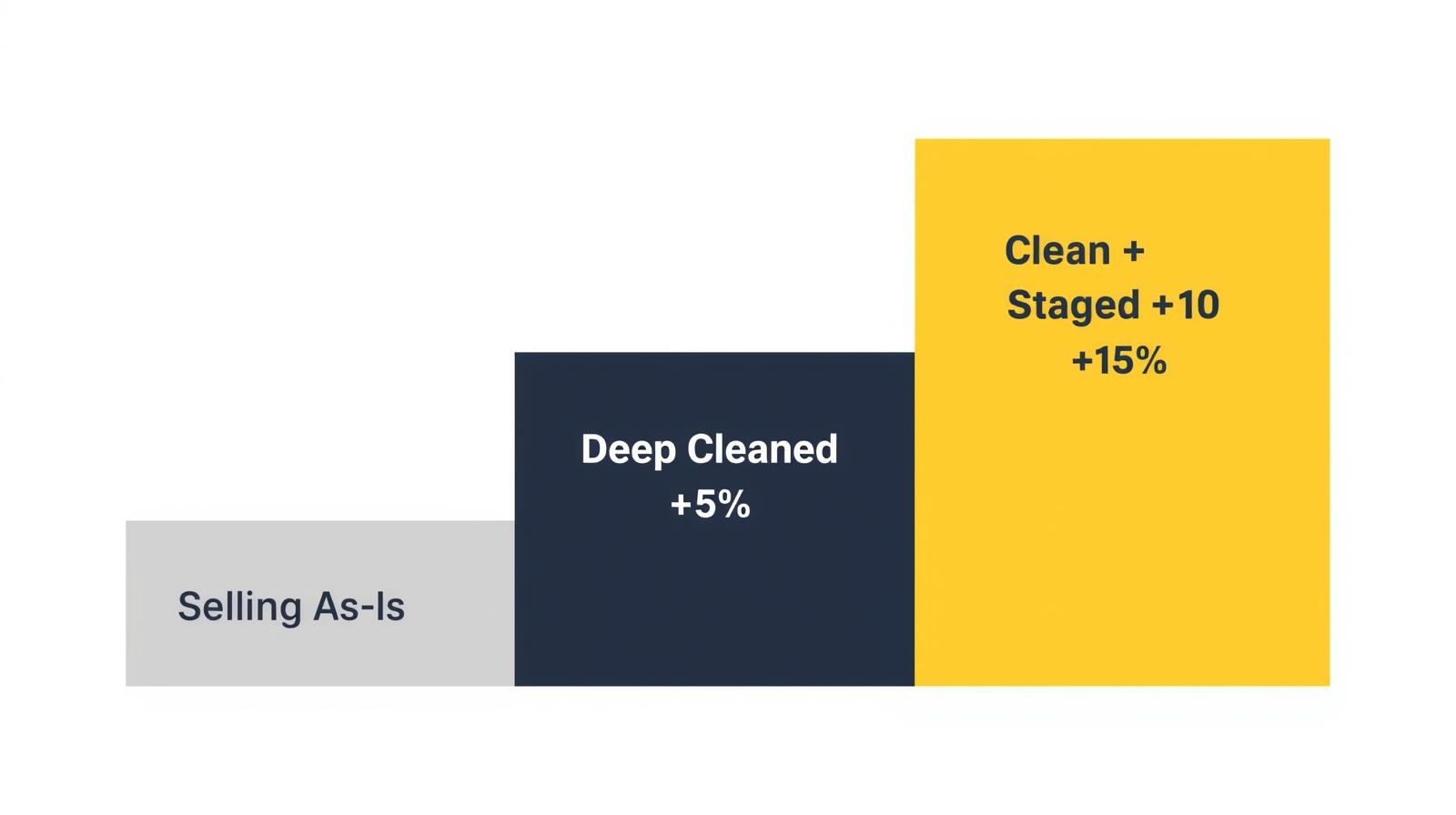
Figure 1: The “Value Ladder” of Pre-Listing Prep.
The data is clear. For the price of one month of furniture rental, you can pay for a Deep Clean AND a Staging Consultation. This combination protects your equity first, then builds the dream second.
(If you are unsure which renovations actually pay off, check our Pricing & Fees Page for a breakdown of high-ROI updates).
The “Dog Bowl” Test
I always tell my clients this: “I want the buyer to be surprised you own a dog.”
Have you ever walked into a house that felt fresh and airy, toured the whole main floor, walked into the kitchen, saw a water bowl, and thought, “Oh wow, I didn’t even realize they had a dog!”?
That is the goal.
We become “nose blind” to our own lives. You don’t smell the dog, the cooking spices, or the basement dampness because you live there. But a buyer smells it in the first 10 seconds. And once they smell it, they stop looking at your upgrades and start looking for the exit.
The Fix: Don’t guess. Invite a “brutal friend” over before you list. Ask them to stand in the foyer and tell you the truth. If they smell anything, hire a professional cleaner immediately.
The “Golden List”: 4 Spots Sellers Always Miss
Most sellers vacuum the middle of the room and wipe the counters. That is “maintenance.” To get top dollar, you need to attack the “Detail Zones” that signal the home is well-maintained.
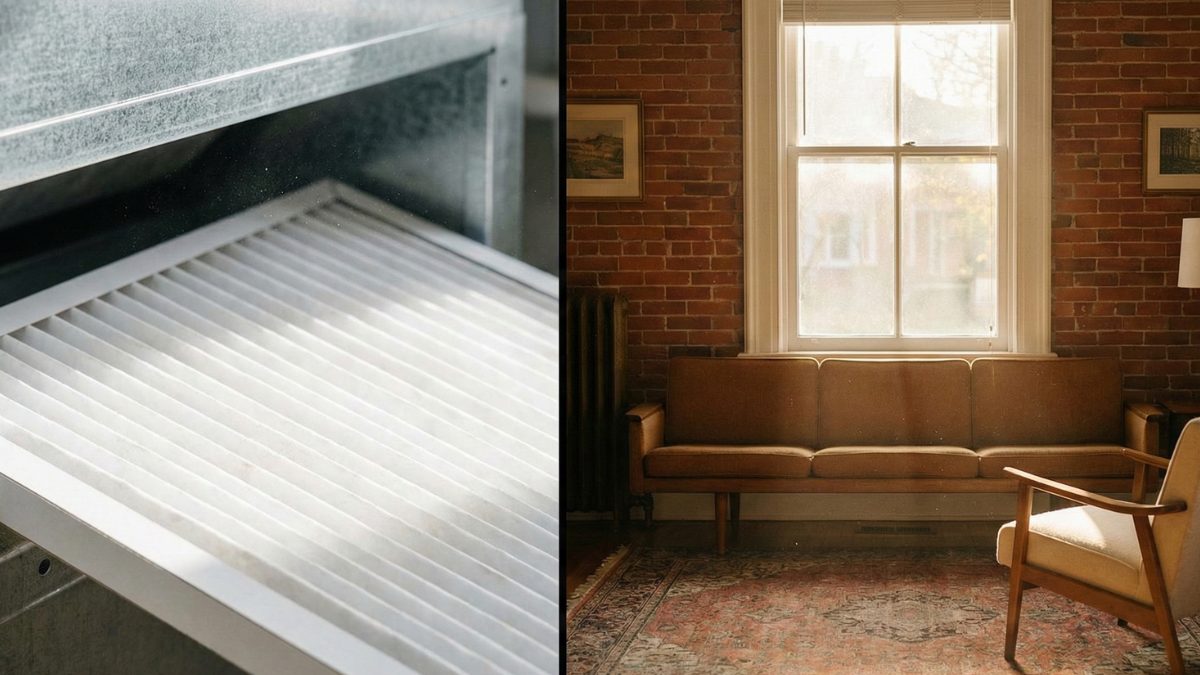
The Furnace Room (Critical): If the furnace is covered in dust or the filter is clogged, buyers assume the mechanicals are old and neglected. A sparkling furnace room—with a clean filter—tells the buyer: “This home has been well maintained.”
Exhaust & Ceiling Fans: Look up. Buyers will. If your bathroom fan is clogged with grey fuzz, it creates an immediate “ick.” Bonus: A dirty fan is loud and rattles. A clean fan is quiet. Cleaning it actually makes your home sound newer.
Appliances (If Staying): Buyers will open everything. If the dishwasher, microwave, or oven are included in the sale, they must be spotless inside. A crusty oven rack suggests a lack of care.
Baseboards & Trim: These frame your floors. If they are scuffed, even new flooring looks old. A Magic Eraser here can make the whole house feel 5 years younger.
Note: Don’t forget the hidden spots. Buyers are investigating. They will open hall closets and kitchen cabinets. If those spaces are dusty or disorganized, it signals a lack of storage and care.
The Winning Strategy: Clean First, Then Stage
Staging works. It helps a buyer fall in love and visualize their life in your home—especially if they can’t figure out where the TV goes or if your current furniture is a bit dated.
But staging works best when it highlights the home, not when it’s trying to cover it up.
Here is the “Smart Money” Budget:
The Deep Clean ($400 – $800): Hire a pro crew to scrub the baseboards, steam the carpets, and wash the windows. Make the house shine.
The Staging Consultation ($150 – $250): You don’t always need to rent a whole house of furniture. For a fraction of the cost, a professional stager can visit for 90 minutes. They will walk room-by-room, telling you exactly what to declutter, how to rearrange your furniture, and where to add a few low-cost accessories to transform the look.
The Bottom Line: You can hire a stager to do the work, or you can DIY their plan—but getting that expert “Roadmap” is invaluable. If you clean the “bones” and then apply the stager’s plan, you win.
Not Sure Where to Start?
Every home is different. Some just need a deep clean, while others need a full staging strategy to get top dollar.
Whether you are looking to sell in 2 weeks, 1 month, or in 6 months, planning now will pay off.
If you aren’t sure what your home needs, let’s chat.
👉 Get a Free, No-Obligation “Prep Audit”
We will come by for 20 minutes, walk through the home with you, and give you a prioritized plan of exactly what to clean, what to fix, and what to stage—so you don’t spend a dime on things that don’t pay you back.
We will give you the checklist, whether you hire us or not.

 Facebook
 X
X
 Pinterest
 Copy Link